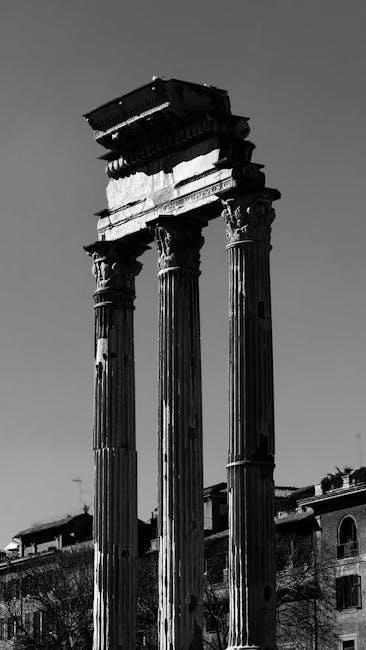
the fall and decline of the roman empire pdf
Gibbon’s monumental work explores the multifaceted reasons for Rome’s collapse‚ from political instability and economic woes to barbarian pressures.
Historical Context of Gibbon’s Work
Edward Gibbon‚ an 18th-century historian‚ embarked on his magnum opus‚ The History of the Decline and Fall of the Roman Empire‚ amidst the Enlightenment’s intellectual fervor. His work‚ spanning six volumes‚ wasn’t merely a chronicle of events but a profound inquiry into the factors contributing to one of history’s most significant collapses.
Gibbon’s perspective was shaped by his era’s emphasis on reason and skepticism. He sought to move beyond traditional narratives attributing the fall to Christian morality‚ instead focusing on political corruption‚ economic weaknesses‚ and military overextension. His meticulous research‚ drawing upon primary sources‚ offered a nuanced and critical assessment of Rome’s decline‚ influencing subsequent historical scholarship. The work’s enduring legacy lies in its analytical depth and elegant prose.
Scope of the Decline and Fall
Gibbon’s ambitious scope encompasses a vast period‚ beginning with the height of the Roman Empire under the Antonine emperors and extending through the fall of Constantinople in 1453 AD. While primarily focused on the Western Roman Empire’s disintegration‚ his narrative acknowledges the Eastern Empire’s continuation as a direct Roman successor.
The “decline” isn’t presented as a sudden event but a protracted process spanning centuries‚ marked by periods of crisis and temporary revival. Political instability‚ economic hardship – including high taxation and inflation – and relentless barbarian invasions are central themes. Gibbon meticulously details the interplay of these factors‚ illustrating how internal weaknesses and external pressures converged to dismantle the Roman world.
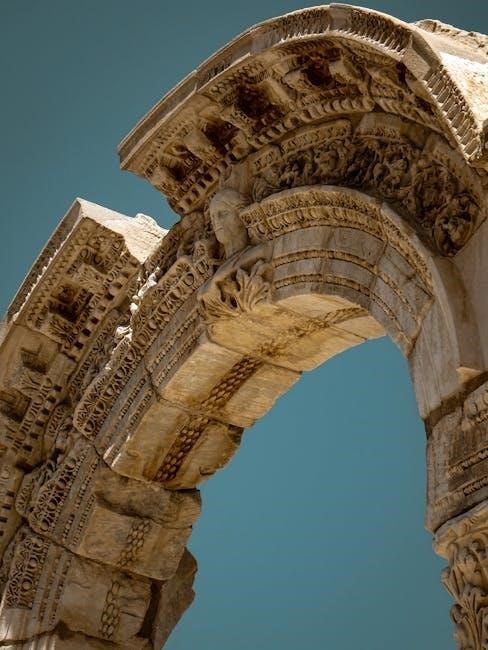
Political Factors in the Decline
Political instability‚ corruption‚ and a rapid succession of ineffective emperors significantly weakened the Roman state‚ fostering administrative decay and crisis.
Political Instability and Imperial Succession
The later Roman Empire was plagued by relentless political turmoil‚ a direct consequence of the flawed imperial succession process. The absence of a clear‚ legally defined method for choosing a new emperor led to frequent power struggles‚ civil wars‚ and assassinations.
Ambitious generals and political factions routinely vied for control‚ often resorting to violence and bribery to secure the throne. This constant upheaval destabilized the government‚ diverting resources from crucial areas like defense and infrastructure. The rapid turnover of emperors – many ruling for only brief periods – hindered long-term planning and effective governance.
Corruption flourished within the imperial court‚ as officials exploited their positions for personal gain‚ further eroding public trust and weakening the empire’s administrative capabilities.
Corruption and Administrative Decay
Widespread corruption permeated all levels of Roman administration‚ significantly contributing to the empire’s decline. Officials routinely engaged in bribery‚ extortion‚ and embezzlement‚ diverting public funds for personal enrichment. This systemic corruption undermined the effectiveness of government institutions and eroded public trust.
Administrative decay manifested in inefficient bureaucracy‚ poorly enforced laws‚ and a decline in the quality of public services. The vastness of the empire made oversight difficult‚ allowing corruption to flourish unchecked.
Tax collection became increasingly oppressive and arbitrary‚ as corrupt officials exploited their power to extract excessive sums from citizens. This fueled resentment and economic hardship‚ further destabilizing the empire.
The Crisis of the Third Century
The Third Century Crisis (235-284 AD) represented a period of intense political‚ military‚ and economic turmoil that nearly destroyed the Roman Empire. Frequent changes in leadership – with numerous emperors rising and falling through assassination or civil war – created profound instability.
Barbarian invasions intensified during this period‚ exploiting the empire’s internal weaknesses. Simultaneously‚ economic problems like high taxation and inflation crippled trade and agriculture.
Administrative breakdown and political fragmentation saw parts of the empire temporarily break away‚ forming independent states. This era tested the empire’s resilience and foreshadowed the challenges to come.
Division of the Empire: East vs. West
Emperor Diocletian’s reforms in the late 3rd century formally divided the Roman Empire into Eastern and Western halves‚ aiming to improve administration and defense. This division‚ while initially intended as a practical solution‚ ultimately exacerbated existing tensions and contributed to divergent paths.
The Eastern Roman Empire‚ with its capital in Constantinople‚ proved more resilient‚ benefiting from a stronger economy and more stable political structures. The Western Roman Empire‚ however‚ faced increasing pressure from barbarian migrations and internal weaknesses.
This split created distinct cultural and economic spheres‚ ultimately leading to the Western Empire’s fall in 476 AD‚ while the East continued for another thousand years.
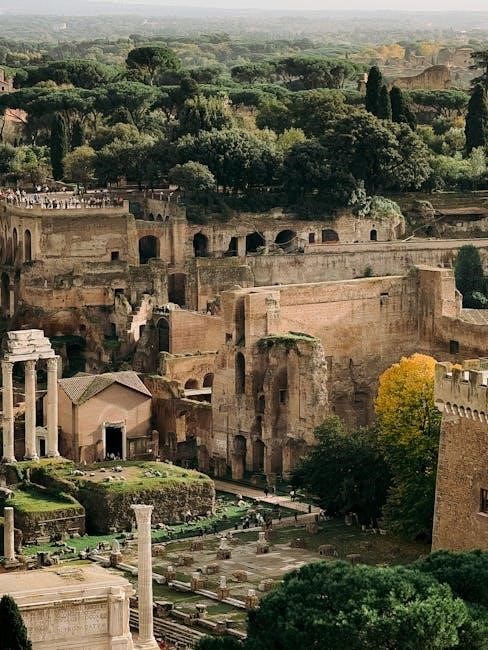
Economic Weaknesses
High taxation‚ inflation‚ and poor financial management crippled Rome’s economy‚ alongside a reliance on imports and declining trade and agricultural output.
High Taxation and Economic Burden
The Roman Empire’s vast military and administrative expenses necessitated increasingly high taxation upon its citizens. This burden fell disproportionately on the productive classes – farmers and merchants – stifling economic growth and innovation.
Constant demands for revenue to fund the army and lavish imperial projects drained wealth from the provinces‚ leading to widespread economic hardship. Citizens struggled to meet these obligations‚ often resorting to abandoning their lands or seeking protection from powerful landowners.
This created a vicious cycle of declining agricultural production‚ reduced trade‚ and further increases in taxation‚ ultimately weakening the empire’s economic foundations and contributing significantly to its decline.
Inflation and Currency Debasement
Economic instability plagued the later Roman Empire‚ manifesting significantly through rampant inflation and the systematic debasement of currency. Emperors‚ facing financial pressures‚ reduced the silver content in Roman coins to fund expenditures.
This practice‚ while providing short-term relief‚ eroded public trust in the currency and triggered a spiraling inflationary cycle. Prices soared as the value of money diminished‚ making it difficult for citizens to afford basic necessities.
Fixed incomes became worthless‚ trade suffered‚ and economic activity contracted. This financial crisis further exacerbated existing problems‚ contributing to the empire’s overall decline and weakening its ability to respond to external threats.
Decline in Trade and Agricultural Production
Economic hardship within the Roman Empire was intensified by a noticeable decline in both trade and agricultural production. Constant warfare and instability disrupted established trade routes‚ hindering the flow of goods and increasing costs.
Simultaneously‚ agricultural output suffered due to factors like soil exhaustion‚ climate changes‚ and a decrease in the available workforce – partly caused by plagues and constant military recruitment.
The empire’s increasing reliance on imported goods‚ coupled with its inability to sustain sufficient domestic production‚ created a precarious economic situation‚ further weakening the empire’s foundations and contributing to its eventual fragmentation.
Reliance on Imported Goods
The Roman Empire’s increasing dependence on imported goods significantly contributed to its economic vulnerabilities. As domestic production declined – particularly in agriculture – the empire became reliant on external sources for essential resources and luxury items.
This reliance created a drain on the empire’s wealth‚ as funds were continuously directed outwards to pay for these imports. Disruptions to trade routes‚ whether due to warfare or political instability‚ could quickly lead to shortages and economic distress.
Furthermore‚ this dependence hindered the development of a self-sufficient economy‚ leaving the empire susceptible to external pressures and economic manipulation.
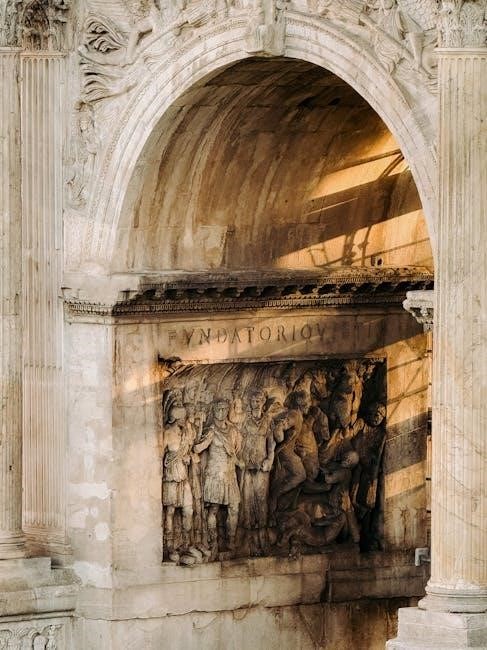
Military Challenges
Barbarian invasions‚ overextended frontiers‚ and a decline in military discipline severely strained Rome’s defenses‚ ultimately weakening its ability to maintain control.
Barbarian Invasions: Goths‚ Vandals‚ Huns
Waves of barbarian migrations relentlessly pressured the Roman Empire’s borders‚ initiating a period of sustained conflict and territorial loss. The Goths‚ initially seeking refuge from the Huns‚ eventually revolted and sacked Rome in 410 AD‚ a deeply symbolic event.
The Vandals‚ known for their destructive tendencies‚ established a kingdom in North Africa and disrupted Roman trade routes. Simultaneously‚ the fearsome Huns‚ under Attila‚ launched devastating raids into Gaul and Italy‚ further destabilizing the empire. These incursions exposed the vulnerabilities of Roman defenses and contributed significantly to the empire’s fragmentation‚ demonstrating a critical military challenge.
Overextension and Military Costs
Rome’s vast empire‚ while impressive‚ proved increasingly difficult and expensive to maintain. Defending extensive borders against numerous threats required a massive and costly military apparatus. Constant warfare drained the empire’s resources‚ diverting funds from essential infrastructure and public services.
The sheer logistics of supplying and moving armies across such a large territory presented a significant challenge. Furthermore‚ the need to recruit and pay soldiers – often including mercenaries – placed a tremendous burden on the Roman economy‚ exacerbating existing financial difficulties and contributing to the empire’s overall decline.
Decline in Military Discipline and Quality
Historically renowned for its rigorous training and unwavering discipline‚ the Roman army experienced a noticeable decline in quality over time. Recruitment increasingly relied on attracting soldiers from less-Romanized provinces‚ often lacking the same commitment to Roman ideals and military traditions.
This shift led to a weakening of unit cohesion and a decline in battlefield effectiveness. Corruption within the ranks also contributed to the problem‚ as officers prioritized personal gain over the welfare of their troops and the defense of the empire. The reliance on mercenaries‚ while addressing manpower shortages‚ further eroded military discipline and loyalty.
The Role of Mercenaries
Facing persistent manpower shortages‚ the Roman Empire increasingly turned to mercenary forces to supplement its legions. While providing a short-term solution to military needs‚ this reliance proved detrimental in the long run. Mercenaries‚ often recruited from Germanic tribes and other groups‚ lacked the loyalty and dedication of Roman citizens.
Their primary motivation was payment‚ and their allegiance could shift depending on who offered the most. This created instability and unreliability within the army‚ as mercenaries were prone to desertion or even switching sides during conflicts. Financial strain from maintaining these costly forces further weakened the empire’s resources.
Social and Cultural Shifts
Declining civic virtue‚ the rise of Christianity‚ and a loss of traditional values eroded Roman society‚ contributing to internal weaknesses and instability.
Decline in Civic Virtue
Apathy and self-interest gradually replaced the earlier Roman commitment to public service and collective good. This erosion of civic virtue manifested in widespread corruption within the government and a diminishing sense of responsibility among the citizenry.
Individuals increasingly prioritized personal gain over the welfare of the empire‚ leading to a decline in participation in public life and a weakening of the social fabric. The traditional Roman ideals of duty‚ honor‚ and sacrifice were slowly abandoned‚ fostering a climate of moral decay. This internal weakening made Rome more vulnerable to external pressures and contributed significantly to its eventual decline‚ as highlighted in analyses of the period.
Rise of Christianity and its Impact
Christianity’s emergence and spread presented a complex challenge to the traditional Roman state and its polytheistic religious foundations. Initially persecuted‚ Christianity gained followers‚ offering a different worldview emphasizing spiritual over material concerns. Some historians argue this shifted focus away from civic duty and loyalty to the empire.
However‚ the faith also provided a new source of unity and moral strength during a period of decline. Gibbon himself explored this duality‚ noting the contrasting constancy of early Christians. Ultimately‚ Christianity’s rise coincided with‚ but wasn’t solely responsible for‚ the empire’s transformation and eventual fragmentation.
Loss of Traditional Values
A decline in civic virtue is frequently cited as a contributing factor to Rome’s fall. Traditional Roman values – duty‚ discipline‚ frugality‚ and devotion to the state – eroded over time‚ replaced by self-interest‚ luxury‚ and moral decay. This weakening of the social fabric undermined the empire’s cohesion and resilience.
Political corruption and a focus on personal gain over public service exacerbated this trend. The pursuit of wealth and power overshadowed the ideals that had once defined Roman character. This internal weakening made the empire more vulnerable to external pressures and contributed to a sense of societal disintegration.
Urban Decay and Population Decline
Roman cities‚ once vibrant centers of commerce and culture‚ experienced significant decline during the later empire. Infrastructure crumbled‚ public services deteriorated‚ and urban populations dwindled as people fled to the countryside seeking safety and sustenance. High taxation and economic hardship contributed to this exodus‚ leaving cities impoverished and vulnerable.
Population decline‚ exacerbated by plagues‚ warfare‚ and economic difficulties‚ further weakened the empire. A shrinking workforce meant reduced agricultural output and fewer soldiers to defend the borders. This demographic crisis compounded the other challenges facing Rome‚ accelerating its descent into instability and ultimately‚ fragmentation.
External Pressures and Invasions
Germanic tribes‚ Huns‚ and Vandals relentlessly pressured Roman borders‚ culminating in the Sack of Rome and the eventual fall of the Western Empire in 476 AD;
The Germanic Tribes and their Migrations
The Germanic tribes‚ including the Goths‚ Vandals‚ and Franks‚ played a pivotal role in the decline of the Roman Empire through sustained migrations and conflicts. Initially seeking refuge from the encroaching Huns‚ these tribes pressured Roman frontiers‚ leading to increased military engagements and straining imperial resources.
Roman attempts to assimilate or control these groups often failed‚ resulting in rebellions and incursions. The Visigoths‚ for example‚ famously sacked Rome in 410 AD‚ a deeply symbolic event demonstrating the empire’s vulnerability. These migrations weren’t simply invasions; they were complex movements driven by various factors‚ including climate change and population pressures‚ ultimately reshaping the political landscape of Europe and contributing to the fragmentation of Roman authority.
The Huns and their Impact on Europe
The Huns‚ a nomadic group originating from Central Asia‚ exerted immense pressure on both the Roman Empire and the Germanic tribes during the 4th and 5th centuries AD. Their westward migration‚ driven by unknown factors‚ triggered a domino effect of displacement‚ forcing various Germanic peoples to seek refuge within Roman territories.
This influx significantly destabilized the empire’s borders and stretched its military capabilities. The Huns’ fearsome reputation as warriors and their devastating raids instilled widespread terror. While they didn’t directly conquer vast swathes of Roman land‚ their actions indirectly contributed to the empire’s weakening by disrupting established power dynamics and accelerating the process of barbarian settlement.
Sack of Rome: A Symbolic Blow
The Sack of Rome in 410 AD by the Visigoths‚ led by Alaric I‚ was a profoundly symbolic event‚ though not the immediate cause of the empire’s fall. While Rome had been previously threatened‚ this was the first time in nearly 800 years the city itself had fallen to a foreign enemy.
The event shattered the illusion of Roman invincibility and sent shockwaves throughout the empire and beyond. It demonstrated the vulnerability of the Western Roman Empire and emboldened other barbarian groups. Though Rome recovered‚ the psychological impact was immense‚ signaling a dramatic shift in power and foreshadowing the empire’s eventual disintegration;
The Fall of the Western Roman Empire (476 AD)
The year 476 AD traditionally marks the fall of the Western Roman Empire‚ though it was a gradual process rather than a sudden event. Odoacer‚ a Germanic chieftain‚ deposed Romulus Augustulus‚ the last Roman Emperor in the West. This wasn’t a violent conquest‚ but a deposition – Odoacer didn’t claim the imperial title himself‚ instead ruling as King of Italy.
This act symbolized the end of the line of Western Roman Emperors and the empire’s central authority. While Roman culture and institutions persisted‚ the Western Empire fractured into various Germanic kingdoms. The Eastern Roman Empire‚ or Byzantine Empire‚ continued for another thousand years‚ preserving Roman traditions.
The Eastern Roman Empire (Byzantine Empire)
The Byzantine Empire sustained Roman traditions‚ exhibiting political and economic resilience for centuries after the West’s fall‚ notably under Justinian’s rule.
Continuation of Roman Traditions
The Eastern Roman Empire‚ later known as the Byzantine Empire‚ consciously preserved and continued many aspects of Roman civilization. This included its legal system‚ administrative structures‚ and military organization‚ adapting them over time to suit new circumstances. Greek became the dominant language‚ but Roman law‚ particularly Justinian’s Code‚ remained foundational.
Byzantine emperors saw themselves as the legitimate successors to the Roman emperors‚ maintaining the imperial title and claiming universal authority. Art‚ architecture‚ and literature flourished‚ often drawing inspiration from classical Roman models. This deliberate continuation of Roman traditions provided a sense of continuity and stability‚ allowing the Eastern Empire to endure for nearly a thousand years after the fall of the West‚ becoming a beacon of culture and learning.
Political and Economic Resilience
The Byzantine Empire demonstrated remarkable political and economic resilience‚ factors crucial to its longevity. A centralized bureaucracy‚ efficient tax collection‚ and a strong monetary system fostered economic stability‚ even amidst external threats. Constantinople’s strategic location facilitated control of vital trade routes between East and West‚ generating substantial revenue.
Politically‚ a strong imperial authority‚ coupled with a sophisticated diplomatic corps‚ allowed the Byzantines to navigate complex relationships with neighboring powers. While internal power struggles occurred‚ the empire generally avoided the prolonged periods of civil war that plagued the Western Roman Empire‚ contributing to its sustained strength and prosperity for centuries.
Justinian’s Reign and its Legacy
Justinian I’s reign (527-565 AD) marked a golden age for the Byzantine Empire‚ characterized by ambitious military campaigns and significant legal reforms. He reconquered vast territories in North Africa‚ Italy‚ and parts of Spain‚ briefly restoring the Roman Empire’s former glory; His most enduring legacy is the Corpus Juris Civilis‚ a comprehensive codification of Roman law that profoundly influenced legal systems worldwide.
However‚ these achievements came at a substantial cost. Constant warfare strained the empire’s resources‚ and devastating plagues‚ like the Justinianic Plague‚ decimated the population. Despite these challenges‚ Justinian’s reign laid the foundation for centuries of Byzantine cultural and political influence‚ solidifying its position as a major power.
The Final Fall of Constantinople (1453 AD)
Constantinople’s fall to the Ottoman Turks in 1453 marked the definitive end of the Byzantine Empire‚ the eastern continuation of the Roman world. After a prolonged siege‚ the city’s formidable walls were breached by Ottoman cannons‚ leading to fierce street fighting and ultimately‚ the city’s capture by Mehmed II.
This event sent shockwaves through Europe‚ signaling the end of a millennium-old empire and disrupting trade routes. The fall also prompted a westward migration of Byzantine scholars‚ bringing with them classical texts that fueled the Renaissance. It symbolized a shift in power and a turning point in world history.
Long-Term Consequences
Rome’s decline fragmented Europe‚ fostering new kingdoms while preserving Roman law and culture‚ profoundly influencing Western civilization for centuries afterward.
The Fragmentation of Europe
The collapse of the Western Roman Empire didn’t result in a singular‚ unified replacement‚ but rather a fractured landscape of emerging kingdoms. Previously Roman provinces dissolved into independent entities‚ often ruled by Germanic tribes who had long interacted with‚ and sometimes fought against‚ Rome. This period saw the rise of the Franks‚ Visigoths‚ Ostrogoths‚ Vandals‚ and others‚ each establishing their own territories and legal systems.
Political unity dissolved‚ replaced by localized power structures and frequent conflicts between these nascent kingdoms. Trade routes were disrupted‚ and the centralized administration that Rome provided vanished‚ leading to a decline in infrastructure and economic activity. The cultural landscape also became increasingly diverse‚ blending Roman traditions with those of the migrating populations‚ ultimately shaping the medieval character of Europe.
The Rise of New Kingdoms
Following the Western Roman Empire’s fall‚ a power vacuum emerged‚ swiftly filled by various Germanic tribes. The Franks‚ under leaders like Clovis‚ consolidated power in Gaul (modern France)‚ establishing a dynasty that would profoundly shape Western Europe. Visigoths settled in Spain‚ creating a kingdom that blended Roman and Germanic legal traditions.
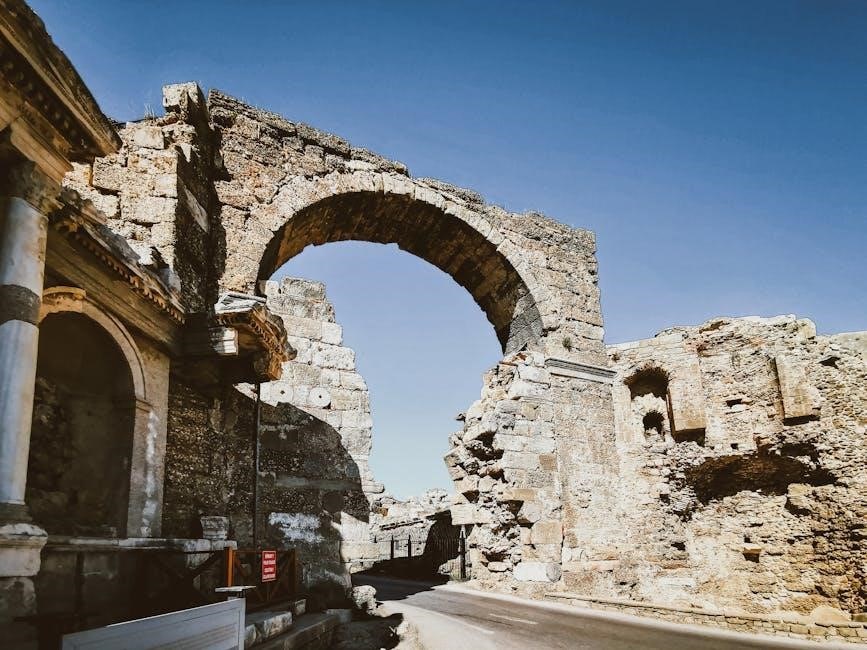
Meanwhile‚ the Ostrogoths briefly established a kingdom in Italy‚ while the Vandals carved out a North African realm. These kingdoms weren’t simply replacements for Roman rule; they represented new political and social orders‚ often incorporating Roman administrative practices alongside their own tribal customs. This period marked a significant shift in the European political map‚ laying the foundations for the medieval world.
Preservation of Roman Law and Culture
Despite the political fragmentation‚ Roman law and cultural elements endured‚ profoundly influencing subsequent Western civilizations. The Corpus Juris Civilis‚ compiled under Justinian in the East‚ preserved Roman legal principles‚ becoming a cornerstone of legal systems across Europe for centuries.
Latin remained the language of scholarship and the Church‚ facilitating intellectual continuity. Roman architectural styles‚ engineering techniques‚ and administrative practices were adopted and adapted by successor kingdoms. Monastic orders played a crucial role in preserving classical texts‚ ensuring the survival of Roman literature and philosophy. This legacy demonstrates Rome’s lasting impact‚ even after its political demise.
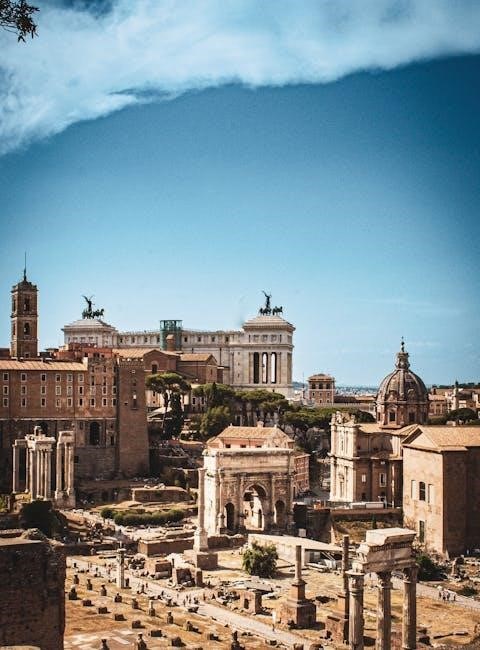
Influence on Western Civilization
The Roman Empire’s influence permeates Western civilization‚ shaping its legal‚ political‚ and cultural foundations. Roman concepts of republicanism and centralized governance informed the development of modern nation-states. Its legal system‚ particularly through the Corpus Juris Civilis‚ continues to influence legal codes worldwide.
Furthermore‚ Roman architectural innovations – arches‚ domes‚ and concrete – are still employed today. The Latin language served as the basis for the Romance languages‚ and Roman literature continues to be studied and admired. The spread of Christianity‚ initially within the Empire‚ profoundly shaped Western values and beliefs‚ solidifying Rome’s enduring legacy.


Leave a Reply
You must be logged in to post a comment.