what is tile in manual handling
What is TILE in Manual Handling?
TILE is a checklist-based risk assessment tool used to evaluate manual handling tasks. It systematically examines Task, Individual, Load, and Environment factors, providing a structured approach to identify potential hazards and implement appropriate control measures.
Visual representations, like those found online, demonstrate the process flow, aiding in understanding and application of the assessment.
Manual handling, encompassing any transporting or supporting of a load by hand or bodily force, presents significant risks within workplaces. These risks aren’t simply about heavy lifting; they extend to repetitive movements, awkward postures, prolonged force exertion, and exposure to vibration. Consequently, musculoskeletal disorders (MSDs) – affecting muscles, joints, ligaments, nerves, tendons, and structures of the spine – are a leading cause of work-related ill health.
The prevalence of MSDs underscores the critical need for proactive risk management. Ignoring these hazards can lead to employee discomfort, reduced productivity, absenteeism, and substantial costs associated with medical treatment and compensation. A robust approach to manual handling risk assessment is therefore paramount.
Tools like TILE emerge as vital components of this approach. While TILE itself is a risk assessment tool, understanding the broader context of manual handling risks is essential for its effective implementation. Recognizing the potential for harm – from strains and sprains to more severe, chronic conditions – forms the foundation for a safer working environment. Online resources, including checklists and visual guides, highlight the importance of a systematic evaluation process, which TILE facilitates.
Ultimately, mitigating these risks protects employees and contributes to a more efficient and sustainable operation.
Defining TILE: An Overview
TILE is a widely recognized, practical risk assessment tool specifically designed for manual handling tasks. It’s an acronym representing the four key areas of consideration: Task, Individual, Load, and Environment. Unlike purely subjective assessments, TILE provides a structured, checklist-based approach, prompting a thorough evaluation of each element contributing to potential risk.
The core principle of TILE is to identify hazards within each category. For example, under ‘Task’, factors like awkward postures or excessive twisting are assessed. ‘Individual’ considers the worker’s capabilities and health. ‘Load’ examines weight, size, and grip, while ‘Environment’ focuses on floor surfaces and lighting.
TILE isn’t a scoring system that delivers a single ‘risk level’; instead, it’s a qualitative tool. It highlights areas requiring attention and informs the selection of appropriate control measures. Visual aids, readily available online, often depict the TILE process as a series of questions or prompts, guiding the assessor through each stage.
Its simplicity and comprehensiveness make it accessible to a wide range of users, promoting a proactive safety culture. The tool’s strength lies in its ability to break down complex tasks into manageable components for effective risk mitigation.
Task – Analyzing the Job Requirements
Within the TILE framework, the ‘Task’ component demands a detailed analysis of how the work is performed. This goes beyond simply identifying the action; it requires dissecting the movement patterns and physical demands involved. Key considerations include the frequency and duration of lifting, carrying, or repetitive movements.
Awkward postures – twisting, bending, reaching – are critical elements to assess. Does the task necessitate working at height or in a confined space? Are there sudden or unexpected movements? The presence of these factors significantly elevates risk. Analyzing the task also involves evaluating the level of force required, not just the weight of the load.
Furthermore, consider the organization of the work. Is there excessive walking or travel distance with the load? Is the task highly repetitive, leading to fatigue? A thorough task analysis identifies potential stressors that contribute to manual handling injuries.
Online resources often visually represent task breakdowns, aiding in identifying problematic movements. The goal is to pinpoint specific aspects of the job that could pose a risk, forming the basis for targeted control measures. This detailed examination is fundamental to a robust TILE assessment.
Individual – Assessing Physical Capabilities
The ‘Individual’ component of the TILE assessment focuses on the worker’s physical attributes and health status. It’s not simply about physical strength; a holistic evaluation is crucial. Factors like age, gender, and pre-existing medical conditions – particularly musculoskeletal disorders – significantly influence an individual’s capacity to safely perform manual handling tasks.

Consider an employee’s current fitness level and any limitations they may have. Have they received adequate training on proper lifting techniques? Are they aware of their own physical limitations and encouraged to report discomfort? Pregnancy is a vital consideration, requiring adjustments to workload and task allocation.
Psychological factors also play a role. Stress, fatigue, and job satisfaction can impact a worker’s ability to maintain safe handling practices. A rushed or pressured work environment increases the risk of errors and injuries.
This assessment isn’t about disqualifying individuals; it’s about understanding their capabilities and tailoring tasks accordingly. Matching the task to the individual minimizes strain and reduces the likelihood of injury. Resources available online emphasize the importance of a person-centered approach within the TILE framework.
Load – Evaluating Weight and Dimensions
The ‘Load’ component of the TILE assessment systematically examines the physical properties of the objects being handled. Simply knowing the weight isn’t enough; dimensions, shape, and the load’s center of gravity are equally important. An awkwardly shaped load, even if relatively light, can pose a significant risk.
Is the load easily graspable? Are there adequate handholds? A load that is difficult to grip increases the risk of a slip and subsequent injury. Consider the load’s stability – is it likely to shift or topple during carrying? Unstable loads require greater physical effort to control.
The assessment should also consider how the load is presented. Does the worker have to reach awkwardly to pick it up? Is the load at a comfortable height? Frequent lifting from floor level or above shoulder height significantly increases risk.
Online resources highlight the need for accurate weight estimation. Avoid relying on guesswork; use scales when possible. A thorough load evaluation, integrated with the other TILE components, is essential for effective risk management and injury prevention.
Environment – Considering Working Conditions
The ‘Environment’ aspect of the TILE assessment focuses on external factors influencing manual handling risks. This extends beyond immediate workspace conditions to encompass broader environmental influences. Uneven or slippery floors dramatically increase the risk of slips, trips, and falls while carrying loads.
Adequate lighting is crucial. Poor visibility obscures hazards and increases the likelihood of incorrect lifting techniques. Consider glare, shadows, and the overall illumination level. Is there sufficient space to maneuver safely while carrying the load? Confined spaces restrict movement and increase strain.
Temperature extremes – both hot and cold – can impact a worker’s grip strength and physical endurance. Weather conditions, for outdoor tasks, must also be factored in. Are there obstructions in the pathway? Clear, unobstructed routes are essential for safe load transport.
Visual aids, like those depicting risk assessment processes found online, emphasize the importance of a holistic environmental review. Addressing these factors, alongside Task, Individual, and Load considerations, creates a safer working environment and minimizes manual handling injuries.
Risk Factors within the ‘Task’ Component
The ‘Task’ component within the TILE assessment scrutinizes the specifics of the job itself, identifying inherent risks. Repetitive movements, even with light loads, contribute to cumulative strain injuries. Frequent twisting, bending, or reaching significantly increases the risk of back pain and musculoskeletal disorders.
The height at which loads are lifted or placed is critical. Lifting above shoulder height or below knee level places undue stress on the body. Consider the distance the load must be carried – longer distances increase fatigue and the potential for incidents. Does the task involve pushing or pulling, and what is the force required?
Unpredictable or sudden movements, or a lack of breaks during prolonged tasks, elevate risk. Poor posture during the task, often stemming from awkward workstation design, is a major contributor to injury. Visual resources illustrating risk assessment processes highlight the need for detailed task analysis.
The need for excessive force, or maintaining awkward postures for extended periods, are key indicators of high-risk tasks. A thorough ‘Task’ evaluation forms the foundation of a comprehensive TILE assessment.
Risk Factors within the ‘Individual’ Component
The ‘Individual’ component of the TILE assessment focuses on the worker’s physical capabilities and health status. Pre-existing conditions, such as back pain, arthritis, or cardiovascular issues, can significantly increase susceptibility to injury during manual handling. An individual’s level of physical fitness and strength plays a crucial role in their ability to safely perform tasks.
Age is a factor; older workers may have reduced muscle strength and flexibility. Similarly, younger, inexperienced workers may lack the knowledge and technique to handle loads safely. Body mass index (BMI) can influence an individual’s ability to maintain proper posture and balance.
Psychological factors, such as stress or fatigue, can impair judgment and increase the risk of errors. Previous injuries, even if seemingly unrelated, can predispose an individual to re-injury. Consideration must be given to any individual limitations or disabilities.
Proper training and awareness of safe lifting techniques are essential. A comprehensive TILE assessment acknowledges that individual differences necessitate tailored risk management strategies. Ignoring these factors can lead to preventable injuries.
Risk Factors within the ‘Load’ Component
The ‘Load’ component of the TILE assessment meticulously examines the characteristics of the objects being handled. Weight is the most obvious factor; heavier loads naturally pose a greater risk of injury; However, it’s not solely about weight. The load’s size and shape significantly impact handling difficulty. Bulky or awkwardly shaped items disrupt balance and require greater exertion.
The load’s center of gravity is critical. Loads with a high or off-center center of gravity are more unstable and require more strength to control. The load’s grip – whether it has handles, is slippery, or requires a tight grasp – influences the force needed to lift and carry it.
Consider whether the load is compressible or fragile. Fragile loads demand careful handling to prevent damage, potentially increasing stress. Unstable loads, like liquids, can shift during movement, causing loss of control.
The need for repeated lifting or carrying of the same load exacerbates risk. A thorough TILE assessment quantifies these load characteristics to determine the overall risk level and inform appropriate control measures.
Risk Factors within the ‘Environment’ Component
The ‘Environment’ component of a TILE assessment focuses on external conditions impacting manual handling safety. Uneven or slippery floors dramatically increase the risk of slips, trips, and falls while carrying loads. Poor lighting reduces visibility, hindering safe movement and increasing the chance of missteps.
Restricted space – confined areas or obstacles – forces awkward postures and limits maneuverability. Extreme temperatures, whether hot or cold, can affect grip strength and increase fatigue. Ventilation plays a role; poor air quality can contribute to discomfort and reduced performance;
The presence of stairs or ramps introduces additional challenges, requiring greater exertion and increasing the risk of losing control of the load. Variations in floor surface – transitions between carpet and tile, for example – demand increased attention and adjustment.
Consider the layout of the workspace. Long carry distances increase fatigue and exposure to hazards. A comprehensive TILE assessment identifies these environmental factors and guides the implementation of controls to mitigate risks.
The Importance of a TILE Assessment
A TILE assessment is crucial for proactively managing manual handling risks, safeguarding employee wellbeing, and ensuring legal compliance. By systematically evaluating Task, Individual, Load, and Environment factors, it moves beyond subjective judgment to a structured, evidence-based approach.
Implementing TILE reduces the incidence of musculoskeletal disorders (MSDs) – a significant cause of workplace absence and associated costs. Early identification of hazards allows for preventative measures, minimizing the potential for injuries. This proactive stance demonstrates a commitment to employee safety.
The checklist format of TILE makes it accessible and easy to use, even for those without extensive health and safety training. It facilitates clear communication about risks and control measures, fostering a safety-conscious culture.
Furthermore, documented TILE assessments provide evidence of due diligence, demonstrating a responsible approach to risk management. Visual aids, like risk assessment process diagrams available online, enhance understanding and promote consistent application of the methodology.
TILE and Manual Handling Risk Assessments

TILE isn’t a replacement for a comprehensive manual handling risk assessment, but rather a valuable tool within that process. It provides a structured framework for systematically identifying and evaluating risk factors, ensuring no critical element is overlooked.
A standard risk assessment broadly identifies hazards, assesses risks, and implements controls. TILE enhances this by breaking down the assessment into four key areas: Task, Individual, Load, and Environment. This detailed approach allows for a more nuanced understanding of the specific risks involved in each manual handling operation.

The information gathered through a TILE assessment directly informs the risk assessment process. It helps determine the level of risk – low, medium, or high – and guides the selection of appropriate control measures. Online resources, including checklist templates, support this integration.
Essentially, TILE acts as a detailed ‘checklist’ component of a broader risk assessment, ensuring thoroughness and consistency. It’s a practical method for translating general risk assessment principles into actionable steps for improving workplace safety and preventing MSDs.
Using TILE to Prioritize Control Measures
The strength of the TILE assessment lies in its ability to pinpoint specific risk factors, enabling a targeted approach to control measure implementation. Once the TILE checklist identifies hazards within Task, Individual, Load, and Environment, these findings dictate prioritization.
High-risk factors, identified through TILE, demand immediate attention. For example, a ‘Task’ element revealing repetitive twisting combined with a heavy ‘Load’ would be a top priority. Conversely, a low-risk ‘Environment’ factor, like adequate lighting, might require minimal intervention.
TILE facilitates a hierarchy of controls. Elimination or substitution of the hazardous task should be considered first. If not feasible, engineering controls (e.g., lifting aids) are prioritized, followed by administrative controls (e.g., job rotation), and finally, personal protective equipment (PPE).
By systematically evaluating each TILE component, organizations can allocate resources effectively, focusing on the most significant risks. This ensures that control measures are not only implemented but are also proportionate to the level of risk, maximizing their impact on worker safety and well-being.
Control Measures Based on TILE Analysis
TILE analysis directly informs the selection of appropriate control measures, categorized by the risk component identified. For ‘Task’ related risks – repetitive movements or awkward postures – job redesign, task rotation, or implementing rest breaks are effective strategies.
Addressing ‘Individual’ factors, such as lack of training or physical limitations, necessitates comprehensive training programs, ergonomic assessments, and potentially, adjustments to workload or job suitability. Promoting employee awareness of safe lifting techniques is crucial.
‘Load’ related risks – excessive weight or unstable loads – require load reduction, mechanical handling aids (e.g., forklifts, hoists), or improved load packaging. Breaking down large loads into smaller, manageable units is also beneficial.
Finally, ‘Environment’ factors – poor lighting, slippery floors – demand improvements to workplace conditions. This includes adequate illumination, slip-resistant flooring, and maintaining clear walkways. Regular inspections and maintenance are essential.
The chosen control measures should always follow the hierarchy of control: elimination, substitution, engineering controls, administrative controls, and PPE. TILE provides the framework to systematically apply these principles, creating a safer manual handling environment.
Practical Examples of TILE Application
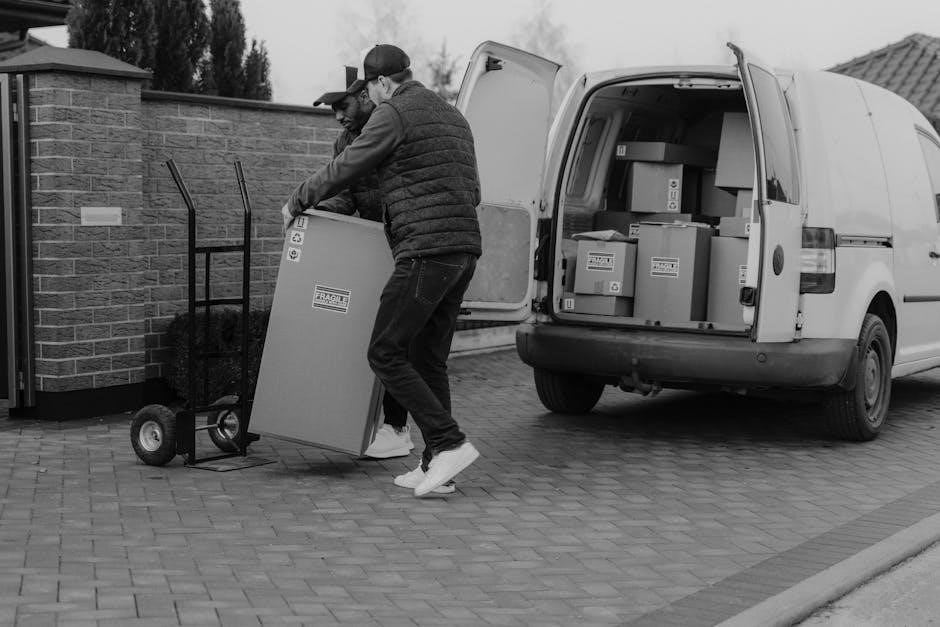
Consider a warehouse worker routinely lifting boxes from floor level to a pallet. A TILE assessment reveals a high ‘Task’ risk due to repetitive bending and twisting. Control measures might include raising the pallet height or providing a mechanical lift to reduce bending.
In an office setting, a staff member frequently carries heavy files. ‘Load’ assessment identifies the weight as a risk. Solutions could involve using a wheeled trolley, digitizing records to reduce physical handling, or redistributing the files.
A construction worker operating in poor weather faces ‘Environment’ risks – slippery surfaces and reduced visibility. Control measures include providing appropriate footwear, ensuring adequate lighting, and postponing work during hazardous conditions.
For a healthcare worker assisting patients with mobility, ‘Individual’ factors like the worker’s strength and training are key. Proper training in patient handling techniques and the use of assistive devices are vital.
These examples demonstrate how TILE translates risk identification into practical, targeted interventions. Visual aids, like risk assessment process diagrams, can further clarify application in diverse workplaces, promoting a proactive safety culture.


Leave a Reply
You must be logged in to post a comment.